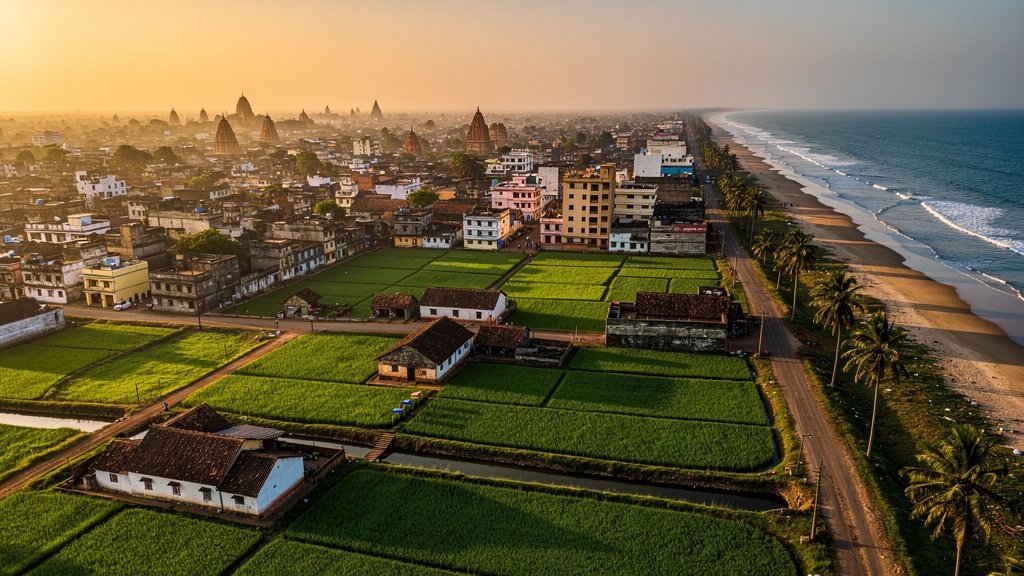
Welcome to Balasore — Odisha's Coastal Treasure
A land where history, nature, and spirituality converge to create an unforgettable travel experience on the shores of the Bay of Bengal.
Nestled along the northeastern coastline of Odisha, Balasore (also known as Baleshwar) is a district of remarkable contrasts and breathtaking beauty. With the Bay of Bengal to its east and the ancient hills of the Nilgiri range to its west, this destination offers travelers an extraordinary tapestry of experiences that few other places in India can match. From the world-famous vanishing sea phenomenon at Chandipur Beach to centuries-old temples that continue to draw pilgrims and history enthusiasts alike, Balasore is a destination that rewards every kind of traveler — whether you seek spiritual solace, natural wonders, cultural immersion, or simply a serene escape from the bustling cities of modern India.
The name "Balasore" itself carries layers of historical significance. Some scholars believe it derives from "Bali" and "Shahar," meaning the city of King Bali — a legendary ruler mentioned in ancient Hindu texts. Others trace its origins to the Portuguese and British colonial periods when the town served as one of the earliest European trading posts on the eastern coast of India. The Dutch, the Danes, the French, and the British all recognized the strategic importance of Balasore's natural harbor and its proximity to the rich hinterland of Odisha. Today, remnants of this colonial past blend seamlessly with the region's ancient Indian heritage, creating a unique cultural landscape that tells the story of centuries of trade, conquest, and cultural exchange.
What makes Balasore truly special is its ability to offer a complete travel experience without the overwhelming crowds that plague many of India's better-known tourist destinations. While millions flock to Goa's beaches or Rajasthan's forts, Balasore quietly preserves its treasures for those discerning travelers who venture off the beaten path. The district stretches across approximately 3,806 square kilometers and encompasses a diverse geography that includes sandy coastlines, fertile river deltas, dense forests, and rolling hills. This geographical diversity translates into an equally diverse range of attractions, activities, and experiences that can easily fill a week-long itinerary or even longer.
The coastal stretch of Balasore is home to some of Odisha's most beautiful and scientifically intriguing beaches. Chandipur, located just 16 kilometers from the district headquarters, is internationally renowned for its unique tidal phenomenon where the sea recedes up to five kilometers during low tide, allowing visitors to literally walk on the ocean floor. This natural wonder, caused by the extremely gentle slope of the continental shelf in this region, creates surreal landscapes of exposed sandbars, tidal pools, and patterns in the sand that change with every tidal cycle. It is an experience unlike anything else on the Indian subcontinent, and it alone justifies a journey to Balasore.
Beyond its natural attractions, Balasore is a living repository of Odia culture and traditions. The district's festivals, particularly the grand celebration of Rath Yatra (Chariot Festival), the colorful revelry of Durga Puja, and the harvest festival of Nuakhai, offer visitors a window into the soul of Odisha. The local cuisine, with its emphasis on rice, fish, lentils, and an extraordinary variety of vegetable preparations seasoned with mustard paste, panch phutana (five-spice blend), and fresh curry leaves, is a gastronomic journey in itself. Street food in Balasore — from crispy dahi vada to steaming gupchup (the local version of pani puri) — is an adventure that delights every palate.
Why Balasore Should Be on Your Travel Bucket List
Ten compelling reasons why this coastal district deserves a prominent place in your travel plans.
1. The Vanishing Sea at Chandipur — A Global Natural Wonder
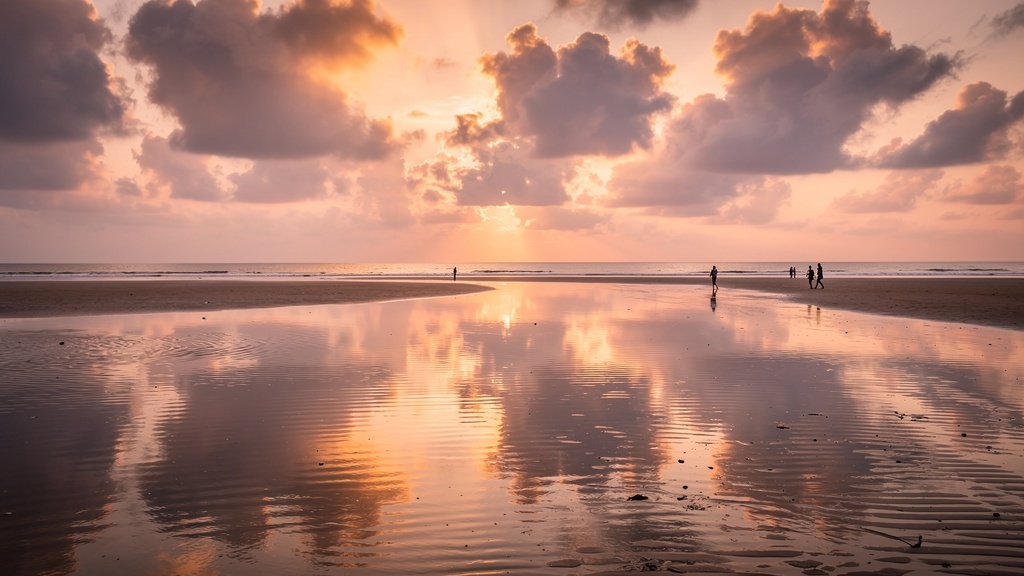
Chandipur Beach is one of only a handful of places on Earth where the sea visibly retreats from the shore during low tide. Twice a day, the waters of the Bay of Bengal pull back as far as five kilometers, revealing a vast expanse of shimmering wet sand, intricate tidal patterns, and small pools teeming with marine life. This extraordinary phenomenon, scientifically explained by the extremely shallow gradient of the ocean floor in this region, creates an almost otherworldly landscape. Visitors can walk for kilometers on the exposed seabed, collecting shells, observing horseshoe crabs (living fossils that have existed for over 450 million years), and watching the interplay of light and water on the sand. When the tide returns, it does so gradually and gently, giving ample time to retreat to the shore. It is an experience that photographs cannot fully capture — it must be felt, heard, and seen in person.
2. Ancient Temples with Stunning Kalinga Architecture
Balasore district is home to some of the finest examples of Kalinga temple architecture, a distinctive style that evolved in Odisha over two millennia. The Panchalingeswar Temple, perched atop a hill with a perennial stream flowing over five naturally formed Shiva lingams, is one of the most photographed and spiritually significant sites in the region. The Khirachora Gopinath Temple in Remuna, dedicated to Lord Krishna, is not only architecturally magnificent but also famous for its legendary "Amruti" (a sacred sweet offering of condensed milk) that has been prepared using the same recipe for over 700 years. Other notable temples include the Chandaneswar Temple, the Sajanagarh Fort Temple, and numerous smaller shrines that dot the landscape, each with its own unique history and architectural significance.
3. Pristine and Uncrowded Beaches
While Chandipur rightfully steals the spotlight, Balasore's coastal stretch includes several other beautiful beaches that remain blissfully uncrowded. Talasari Beach, near the border with West Bengal, is a stunning expanse of golden sand bordered by casuarina groves and offering panoramic views of the Bay of Bengal. Dagara Beach, Choumukha Beach, and Balaramgadi Beach each offer their own unique character and charm, from fishing village atmospheres to secluded stretches perfect for meditation and solitary walks. These beaches provide an authentic coastal experience far removed from the commercialized beach resorts of more popular destinations.
4. Proximity to Simlipal National Park
Balasore serves as a convenient gateway to Simlipal National Park, one of India's most biodiverse protected areas and a UNESCO Biosphere Reserve. Spread across 2,750 square kilometers of dense tropical and subtropical forests, Simlipal is home to Royal Bengal tigers, Asian elephants, leopards, four-horned antelopes, and over 304 species of birds. The park's dramatic waterfalls — including the spectacular Barehipani Falls (the second-highest waterfall in India at 399 meters) and Joranda Falls — make it a paradise for nature lovers and wildlife photographers. A day trip or overnight excursion from Balasore to Simlipal is highly recommended for any visitor to the region.
5. Rich Colonial Heritage and Historical Significance
Balasore's strategic coastal location made it one of the earliest European trading posts in India. The Portuguese established a factory here in the early 16th century, followed by the Dutch, the Danes, and the British. The East India Company's presence in Balasore during the 17th and 18th centuries left behind a legacy of colonial architecture, old cemeteries, and historical records that offer fascinating glimpses into the early days of European commerce in India. The Old British Cemetery, the ruins of Dutch and Danish trading posts, and the colonial-era administrative buildings in the town center are all worth exploring for history enthusiasts.
6. Vibrant Festivals and Living Traditions
Balasore comes alive during its numerous festivals, each celebrated with a fervor and authenticity that remains largely untouched by commercialization. The Rath Yatra (Chariot Festival), while most famous in nearby Puri, is celebrated with equal devotion in Balasore and its surrounding towns. During Durga Puja, the streets are transformed into open-air art galleries with elaborately decorated pandals (temporary structures) showcasing incredible creativity and craftsmanship. The harvest festival of Nuakhai, the spring celebration of Dola Purnima, and the boat festival of Kartik Purnima on the Budhabalanga River offer unique cultural experiences that connect visitors with the living traditions of Odisha. These festivals are not staged for tourists — they are genuine expressions of community life and spiritual devotion.
7. A Food Lover's Paradise
Odia cuisine is one of India's most underappreciated culinary traditions, and Balasore is one of the best places to experience it in its most authentic form. The district's proximity to both the sea and rich agricultural lands means that the local diet features an extraordinary variety of ingredients and preparations. Fresh seafood — including prawns, crabs, pomfret, and hilsa fish — is prepared using traditional recipes that have been passed down through generations. The famous Machha Besara (fish in mustard sauce), Chhena Poda (a baked cheese dessert unique to Odisha), Dalma (a comforting lentil and vegetable stew), and the ubiquitous Pakhala Bhata (fermented rice served cold with accompaniments) are just a few highlights of a culinary tradition that values subtlety, balance, and the natural flavors of fresh ingredients.
8. Adventure and Eco-Tourism Opportunities
For the adventure-inclined traveler, Balasore offers a surprisingly diverse range of activities. Trekking through the Nilgiri hills to the west of the district provides stunning views and encounters with tribal communities that maintain their traditional way of life. Bird watching along the coastal wetlands and at the Kuldiha Wildlife Sanctuary reveals a remarkable avian diversity, with species ranging from white-bellied sea eagles to painted storks. The rivers that crisscross the district — the Budhabalanga, the Subarnarekha, and the Jalaka — offer opportunities for fishing and boating, while the mangrove forests at the river mouths are ecological treasures waiting to be explored by responsible eco-tourists.
9. Affordable and Authentic Travel Experience
One of the most compelling reasons to visit Balasore is the exceptional value it offers travelers. Unlike many of India's popular tourist destinations where prices have risen to meet international expectations, Balasore remains remarkably affordable. Comfortable accommodation, delicious meals, local transportation, and entrance fees to attractions are all priced at a fraction of what you would pay in more commercialized destinations. This affordability, combined with the genuine warmth and hospitality of the local people, creates an authentic travel experience that is increasingly rare in today's world. In Balasore, you are not a tourist to be marketed to — you are a guest to be welcomed.
10. Strategic Location for Exploring Eastern Odisha
Balasore's location in northeastern Odisha makes it an ideal base for exploring the wider region. The holy city of Puri, with its famous Jagannath Temple and spectacular beach, is reachable within a few hours. The state capital Bhubaneswar, known as the "Temple City of India," and the ancient Buddhist site of Dhauli are equally accessible. The Sun Temple at Konark, a UNESCO World Heritage Site and one of the architectural marvels of the medieval world, can be visited as a day trip. Additionally, Balasore's proximity to the West Bengal border means that Kolkata, with its rich cultural offerings, is also within convenient reach by train. This strategic location allows travelers to combine a visit to Balasore with a broader exploration of eastern India's most significant cultural and natural attractions.
Geography, Climate, and the Best Time to Visit
Understanding Balasore's landscape and weather to plan your perfect trip.
Balasore district occupies a geographically diverse region along the northeastern coast of Odisha, bounded by the Bay of Bengal to the east, the Mayurbhanj district to the west and northwest, Bhadrak district to the south, and the state of West Bengal (Purba Medinipur district) to the north. The district's topography can be broadly divided into three zones: the coastal plain, the fertile river delta, and the western uplands that gradually rise toward the Nilgiri hills. This geographical diversity is one of the reasons Balasore offers such a wide range of experiences — from beach vacations and wetland exploration to hill trekking and forest adventures.
The coastal plain, which stretches along the entire eastern boundary of the district, is characterized by sandy beaches, sand dunes stabilized by casuarina plantations, and coastal wetlands that support rich biodiversity. The rivers Budhabalanga, Subarnarekha, and Jalaka flow through the district, creating fertile deltas that have supported agriculture for thousands of years. These river systems also create estuarine environments where freshwater and saltwater mix, producing ecosystems of exceptional ecological importance. The western portions of the district gradually transition into rolling hills and forested areas that form the foothills of the larger Simlipal massif.
Climate and Seasons
Balasore experiences a tropical monsoon climate with distinct seasons that significantly influence the travel experience. Understanding these seasons is crucial for planning a visit that aligns with your interests and expectations.
Winter (October to February) is widely regarded as the best time to visit Balasore. Temperatures range from a comfortable 15°C to 28°C, humidity drops to pleasant levels, and the skies are predominantly clear. This period is ideal for beach visits, temple exploration, wildlife spotting in Simlipal, and outdoor activities of all kinds. The festive season, which spans from October (Durga Puja) through January (Makar Sankranti), adds cultural richness to the pleasant weather. January and February are particularly good for bird watching, as migratory species from Central Asia and Siberia arrive at the coastal wetlands.
Summer (March to June) brings rising temperatures that can reach 38°C to 42°C in May and June. While the heat can be intense, this season has its own attractions. The early mornings and evenings remain pleasant, and the beaches are less crowded. The mango season (April to June) is a highlight, with local varieties offering extraordinary flavor. The sea breezes along the coast provide natural cooling, making beach areas more comfortable than the interior. If you visit during summer, plan outdoor activities for early morning or late afternoon, and stay hydrated.
Monsoon (July to September) transforms the landscape into a lush green paradise. The southwest monsoon brings heavy rainfall (averaging 1,500-1,600 mm annually), rejuvenating the rivers, filling the waterfalls, and turning the countryside into a vibrant emerald tapestry. While some outdoor activities may be limited by rain, the monsoon season offers its own unique beauty. The waterfalls at Devkund and in the Simlipal region are at their most spectacular, the forests are alive with fresh growth, and the dramatic cloud formations over the Bay of Bengal create extraordinary photographic opportunities. However, visitors should be prepared for occasional flooding and disruptions to transportation during heavy rainfall periods.
💡 Travel Tip: Best Time to Visit
For the ideal Balasore experience, plan your visit between October and February. November and December offer the perfect combination of pleasant weather, clear skies, festive atmosphere, and comfortable temperatures for exploring both outdoor attractions and cultural sites.
Getting to Balasore
Balasore is well-connected to major Indian cities by rail, road, and air (via nearby airports). The Balasore railway station is a major stop on the Howrah-Chennai mainline, one of India's busiest rail corridors. Direct trains connect Balasore to Kolkata (approximately 4 hours), Bhubaneswar (approximately 3.5 hours), Chennai, Delhi, Mumbai, and numerous other cities. The station is well-maintained and has been upgraded in recent years with improved amenities for travelers.
By road, Balasore is located on National Highway 16 (formerly NH-5), the major coastal highway connecting Kolkata to Chennai. This makes it easily accessible by bus and private vehicle from cities across eastern India. The road infrastructure has improved significantly in recent years, with the expansion of the highway reducing travel times considerably. Regular bus services connect Balasore to Bhubaneswar, Cuttack, Kolkata, and other regional centers.
The nearest airport is Biju Patnaik International Airport in Bhubaneswar, approximately 200 kilometers to the south. This airport handles domestic flights from all major Indian cities and selected international destinations. From the airport, Balasore can be reached in approximately 3 to 3.5 hours by road or by connecting to a train from Bhubaneswar railway station. There have been discussions about developing a regional airport closer to Balasore, which would significantly improve air connectivity in the future.
Balasore is truly a destination that combines the ancient and the modern, the spiritual and the adventurous, the culinary and the cultural into a single, unforgettable travel experience. Whether you have a weekend or a week, this coastal gem of Odisha promises memories that will last a lifetime. We invite you to explore our detailed guides to places to visit, culture and heritage, and practical travel information to start planning your journey to this extraordinary corner of India.
Ready to Explore Balasore?
Dive into our comprehensive guides and start planning your journey to Odisha's most captivating coastal destination.
Discover Top Attractions